Please Sit Here a While: Britain’s Promenade Benches and Their Small, Salty Eternities
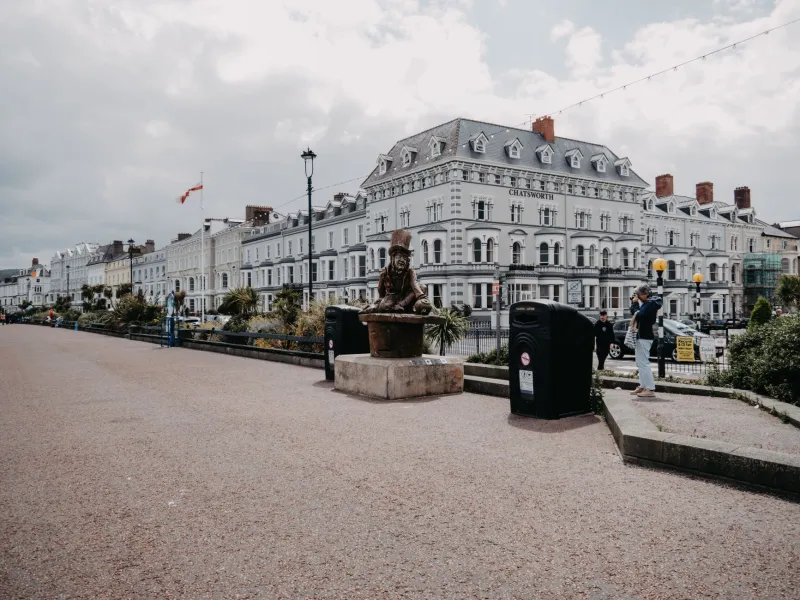
On a grey November morning in 2026, a promenade bench is one of the few places in Britain where you can sit down and be told a story without anyone trying to sell you anything. The wind comes off the sea, the paint is blistering at the edges, and screwed to the backrest is a small brass plaque. It might be no bigger than a postcard. It is also, in its way, a complete life.
Walk along almost any British seafront and you will find them: Brighton, Blackpool, Scarborough, Southwold, Llandudno, Portobello, St Ives, Weston-super-Mare. Some are polished. Some are dulled by salt. Some have been re-screwed after a repair. They carry dates, nicknames, a line of poetry, a complaint about the weather, a thank-you for a marriage. They are not statues. They are seats with a job, and that is exactly why they work.
The grammar of a good plaque
The best inscriptions read less like epitaphs and more like notes passed in class. A full name and two dates will do the basic admin. Then comes the line that matters: who loved this view, who walked this prom every morning, who sat here with a flask and a crossword and refused to go home until the light went. You will find versions of all of them. The plaque has roughly forty words to work with, so every one has to earn its place.
There is a particular British talent for the deadpan memorial. A bench can remember someone as a devoted husband, a keen gardener and a man who never once admitted he was lost. It can note a lifelong support for a football club that brought mostly suffering. It can say, plainly, that she liked a gossip. These are not grand claims. They are better than grand claims. They are recognisable.
The grammar is usually modest. In loving memory. Remembering. A life lived here. Sometimes there is a joke, and the joke is the point. A plaque that admits its subject was frequently late, or hopeless with directions, or allergic to a sensible opinion, does more than polish a reputation. It lets a stranger glimpse a person rather than a monument.
A seat with a job
Why do the British commemorate in plain sight like this? Partly because a bench is useful. A statue stands behind railings and asks to be admired. A bench asks to be used. It holds the weight of tired legs, wet waterproofs, chip paper, birthday cans and a hundred small conversations. The memorial is not protected from life. It is in the middle of it.
That seems to suit us. We are not always comfortable with loud grief, but we are very good at practical remembrance. A bench is the equivalent of a casserole dish left on a doorstep: modest, useful, quietly insistent. It says that the person mattered without demanding that everyone stop and look. It also gives the rest of us somewhere to sit while we think about them, or about nothing at all.
On a promenade, the bench is part of the daily economy. Dog walkers pause by it. Swimmers drape towels over it. Teenagers colonise it. Grandparents claim it after a slow half-mile. The plaque is not an interruption to all this. It is a reminder that the ordinary uses of a place are the ones worth remembering.
Local legend, lightly worn
The best seafront plaques have a sense of place. They mention the old pier, the bandstand, the morning swim, the harbour wall, the bench's particular view of a lighthouse. They let local geography do some of the remembering. A line about the tide is not just weather; it is a life arranged around the sea.
And then there is the local legend, lightly worn. Every town has one, and every promenade seems to have a bench for them: the man who fed the gulls despite official advice, the woman who knew every tide and every dog, the couple who met at the same spot in 1958 and came back every year after. You do not need to have known them. The plaque gives you just enough to imagine the rest, which is what a good archive does.
What the sea air edits
Salt is a ruthless editor. Brass dulls. Letters fill with green. Screws work loose. A plaque that was legible in 1998 can look like a rumour by 2026. Councils repaint benches, replace slats, sometimes move them. Families return with a cloth and a little polish. The maintenance is part of the story too: remembrance here is not a one-off ceremony but a small ongoing chore.
There is an etiquette to it as well. Is it rude to sit on a memorial bench? Not really. The bench was donated so that people would sit. The awkwardness is the point: you are sharing a seat with someone's memory, but you are also just resting your legs. In summer the plaque may be hidden under towels and bags. In winter, when the ice-cream vans have gone and the promenade belongs to dog walkers and hardy swimmers, it gets read.
The small eternity
A bench is not trying to be forever. It is trying to be useful for a while. That may be the most British form of immortality we have: a name, a date, a line about the view, and a place to sit. It does not ask for a pilgrimage. It asks for a pause.
Next time you find one on a seafront, read the plaque before you sit down. You will learn something about a family, a town, a sense of humour, a particular stretch of coast. Then sit anyway. That is what it is for.