Half a Point for Trying: The Weekly Wisdom of the British Pub Quiz
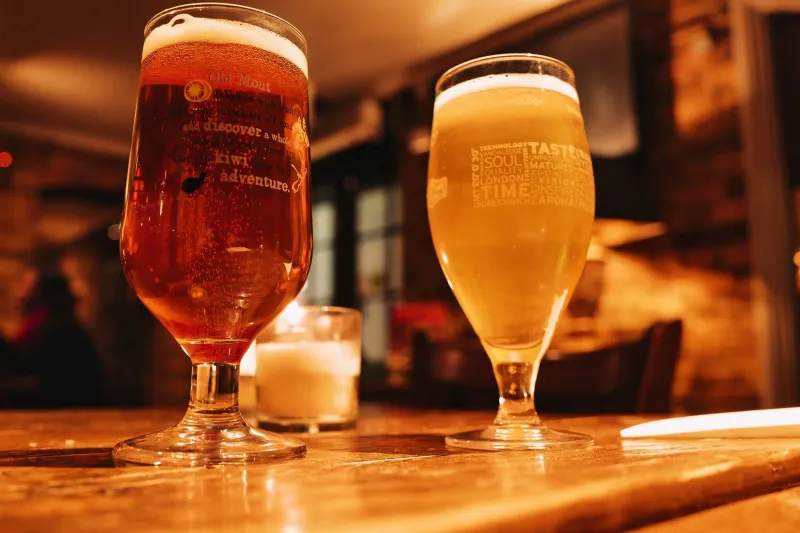
There is a particular sound a British pub makes at around 8.45 on a quiz night. It is not the clink of glasses or the low hum of conversation. It is the rustle of biros on paper, followed by a whispered row about whether the answer is probably right or definitely wrong. Someone says, “No, listen, I’m almost certain,” and everyone else leans in as if the fate of a nation depends on a question about a 1970s sitcom.
That is the real prize, really. Not the bottle of wine or the £40 bar tab. The answer sheet — folded, stained, scored in the margins — is where the evening actually happens.
The Question-Setter’s Beautiful Obsessions
Every quiz has a personality, and it usually belongs to the person with the clipboard. In one pub it is a retired teacher who cannot resist a round on rivers. In another it is the landlord’s brother who thinks any question after 1985 is “modern”. You can tell a lot about a quiz from its obsessions: an unreasonable number of questions about Formula One; a deep and abiding interest in the wives of Henry VIII; a round called “Pot Luck” that is really just whatever the setter saw on a documentary that week.
In 2026, the pub quiz is still gloriously analogue. Phones are meant to be face-down, though everyone knows one table is always “just checking the time”. The questions are read aloud, repeated twice, and then argued over as if the setter has personally insulted the family. A good quiz master knows how to pause before the answer — just long enough to let hope build, just short enough to avoid a riot.
The best quizzes are not the hardest ones. They are the ones with a sense of humour. A round where every answer is a type of cheese. A music round played on a slightly crackly speaker. A picture round that includes a blurry photo of the pub dog and asks for its name. These are the details that make a room feel like it belongs to the people in it.
The Team Names Are Half the Fun
You can learn a lot about Britain from a pub quiz team name. There are the puns: Quiz Team Aguilera, The Hairy Potatoes, Norfolk and Chance. There are the self-deprecating ones: We Thought This Was a Karaoke, Here for the Chips, Two Pints and a Prayer. And there are the names that have clearly been used for years, carried from pub to pub like a family crest.
The names matter because they signal something important: this is not serious. Or rather, it is serious in the way that a game of Monopoly is serious. The stakes are low, the emotions are high, and everyone is allowed to be a little ridiculous. A team name is a small act of theatre, a way of saying: we know this is just a quiz, and we are going to commit to it anyway.
The Art of the Almost-Right
Here is where the British pub quiz truly comes into its own: the near-miss. The answer that is not wrong enough to be embarrassing, but not right enough to count. The answer that sparks a debate lasting longer than the question itself.
You know the type. “Who was the drummer for The Beatles before Ringo Starr?” Someone writes Stuart Sutcliffe with great confidence. Someone else says, “No, it was Pete Best.” A third person insists it was both, technically, depending on the year. The answer sheet becomes a battlefield of crossed-out names and tiny asterisks.
Or: “What is the chemical symbol for potassium?” A team writes P. The quiz master says K. There is a moment of silence, then a furious explanation about Latin. “It’s kalium,” someone hisses. “We should get half a point for knowing it wasn’t P.”
This is the ritual. The almost-right answer is not a failure; it is a conversation starter. It is proof that memory is a messy, collaborative thing. We do not remember alone. We remember in rooms, with other people, with a pint in hand and a biro that has seen better days.
Why We Keep Coming Back
The pub quiz is not really about knowing things. It is about being in a room with other people who also do not know things, and finding that funny. It is about the collective sigh when the music round is from a year nobody recognises. It is about the small triumph of getting a question right because your dad used to say it, or because you once read a plaque on a wall, or because you guessed and got lucky.
In a year when so much of life is mediated by screens and algorithms, the pub quiz is stubbornly, beautifully local. The questions are set by someone you might see in the Co-op. The answers are marked by hand. The arguments are settled by a show of hands, or by the quiz master saying, “I’ll allow it,” which is the most British phrase in the language.
And then there is the answer sheet itself. At the end of the night, it is folded into a pocket or left on the table. It is not a certificate or a trophy. It is a record of an evening: the jokes, the guesses, the moment someone said “I’m almost certain” and was almost right. The answer sheet is the real prize. It always was.