The Most Visited Gallery in Britain Has a Post Office Till
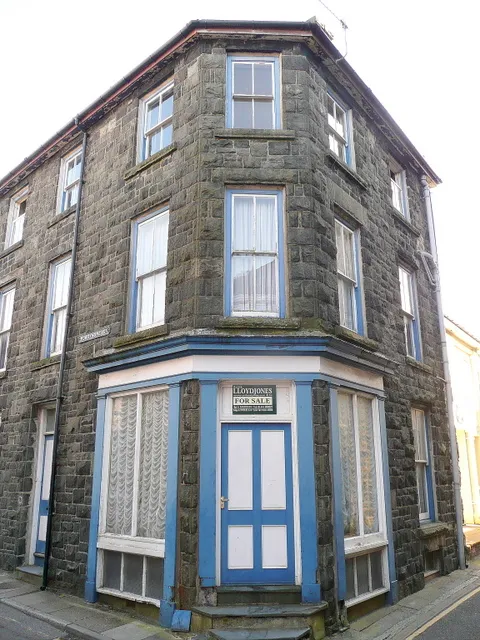
Photo: Jonathan Billinger, CC BY-SA 2.0, via Wikimedia Commons
On a wet Tuesday in November, the most crowded exhibition in my town is not in the arts centre. It is in the window of a corner shop, between the milk fridge and the lottery terminal, where a dozen paintings by Year 6 are held up with Blu Tack and the quiet promise that nobody will touch the Dairy Milk.
The show has no private view. There is no wall text, no invigilator, no gift shop and no QR code leading to a funding evaluation form. The opening hours are the shop’s opening hours. The audience is whoever comes in for cat food, a pint of milk or a birthday card for someone they have forgotten. And yet, by any honest measure, more people will look at those paintings this week than will walk through the door of the nearest publicly funded gallery.
That is not a dig at the gallery. It is a fact about thresholds. A gallery asks you to decide to go. A corner-shop window asks you to buy something small and, while you are there, look up.
The window that does the work
Shop windows have always been advertisements, of course. But in 2026 a growing number of them are doing a second job. Newsagents, village stores, off-licences and the last remaining post offices are giving over a pane of glass to local artists, schoolchildren, photographers and people who make things in their sheds. The displays rotate. They are announced on handwritten notices, in parish newsletters and by word of mouth. The work is rarely for sale. Sometimes it is not even very good. That is part of the point.
The best of these windows have a particular quality: they look like someone made a decision. A stack of tins is moved to one side. A sheet of backing paper is taped up. A fisherman’s float, a child’s drawing of a dog and a photograph of the bus stop in 1978 are arranged with the sort of care that does not announce itself as care. It is curation by instinct, not by committee.
You can call it accidental. I think it is more deliberate than that. A shopkeeper with a spare pane of glass and a local artist with nowhere to show is a partnership that costs almost nothing and reaches almost everyone.
Curation by accident, or by instinct
There is a temptation to romanticise this as a pure, unmediated folk art movement. It is not. Some shop-window shows are just clutter with a laminated sign. Some are a single painting of a lifeboat that has been there since the Queen’s jubilee and will probably outlast us all. But the good ones share a few rules, even if nobody has written them down.
First, the work has to survive daylight. Paintings that look rich in a studio can go thin and chalky in a south-facing window. Photographs fade. Felt goes fuzzy. Second, the show has to be readable from the pavement. Small, delicate things get lost behind a reflection of the number 47 bus. Third, it has to tolerate the shop’s own mess. A window display that cannot cope with a stack of newspapers or a tray of eggs is not really a window display at all.
And fourth, it has to be willing to be ignored. That sounds like a low bar, but it is a kind of freedom. Work in a gallery is often met with the expectation that you will stand in front of it and have a response. Work in a corner-shop window is met with people rushing past, children pointing, someone reading the lottery results, someone else trying to see if the shop has the right sort of lightbulb. The art is not the main event. That is exactly why it gets looked at.
Why the corner shop beats the white cube
Town-centre galleries do important work. They care for objects, employ people, run workshops and give us somewhere to go on a rainy Saturday. But they also ask a lot of us. They ask us to know they exist, to find the entrance, to accept the opening hours, to feel we have permission to be there. None of that is impossible. It is just a series of small hurdles, and small hurdles add up.
A corner-shop window asks nothing. It is on the way to the bus stop. It is next to the bin. It is visible from the queue for the cash machine. In 2026, when so much of our cultural life has moved online and so much of our high street has been converted into flats or vape shops, that kind of visibility matters more than it used to.
Local artists have noticed. A window is cheaper than a billboard, more human than an Instagram grid and considerably less likely to be hidden by an algorithm. For a school, it is a way of showing parents that the art room still exists. For a shopkeeper, it is a way of saying that the shop is not just a transaction. For the rest of us, it is a small, free exhibition on the way to somewhere else.
The economics of tape and trust
None of this is expensive, but it is not free either. There is the cost of tape, paper, a decent light and the time spent changing the display. There is the risk of damage, the awkwardness of saying no to someone whose work is not quite right, and the quiet negotiation over whether a painting of a local landmark is charming or just a bit too much like the one that was there last year.
What makes it work is trust. The shopkeeper trusts the artist not to put up something that will frighten the customers. The artist trusts the shopkeeper not to leave the work in the window until it fades to a ghost. The public trusts the window to be worth a glance. It is a small, fragile ecosystem, and it runs on goodwill rather than grants.
That is also its limitation. A window show cannot replace a gallery, a studio or a properly funded arts programme. It cannot pay an artist’s rent. It cannot conserve a painting for the next century. It is not a substitute for the serious business of making and showing art. But it is a reminder that the serious business is not the only business.
What the window teaches the high street
In 2026, we talk a lot about the high street as a problem to be solved. We talk about footfall, vacancy rates and the experience economy. We talk about pop-ups and meanwhile spaces and cultural regeneration. All of that has its place. But the corner-shop window suggests something simpler: people will look at art if it is put in front of them, in a place they already go, without a dress code or a ticket or a feeling that they might be doing it wrong.
It is not a strategy. It is a habit. And like most good habits, it is easy to overlook. So the next time you are buying milk, look up. There may be a small exhibition between the lottery tickets and the fridge. It will probably be held up with tape. It may not last the week. But it is probably the most honest gallery in town.