The Tear-Off Tab Is the New Invite: Britain’s Noticeboards in 2026
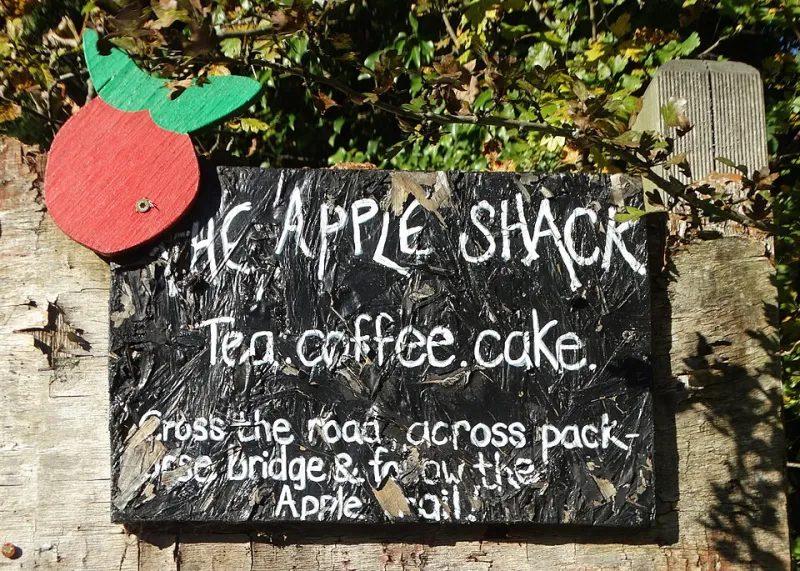
Photo: Neil Theasby , CC BY-SA 2.0, via Wikimedia Commons
There is a particular kind of British optimism that lives on a piece of A5 card, stapled slightly crookedly to a corkboard, with a row of tear-off tabs along the bottom. The tabs are always cut a little too narrow. The card has been rained on. Someone has added a biro note: ‘NEW TIME’. And yet it is there, in the corner of a café window or the porch of a village hall, doing the quiet work of local hype.
In 2026, we are spoiled for ways to find out what’s on. We have algorithms, newsletters, ticketing platforms, group chats and the strange collective memory of social media. But none of them quite do what a noticeboard does. A board does not recommend. It does not personalise. It simply pins up what somebody nearby thought was worth announcing, and leaves the rest to you.
The earliest signal
A noticeboard is often the first place a thing exists in public. Before the choir has a website, before the craft club has a booking system, before the pub gig has a poster with a decent font, there is a photocopied flyer. It says ‘all welcome’ and ‘bring a friend’. It might have a phone number with the last two digits handwritten because the organiser changed SIM cards. It is not slick. It is a signal.
This is why boards are so good at local hype. Hype, in the useful sense, is not marketing. It is the low hum of people making plans. A board lets you see the hum. You can spot the new yoga class, the repair café, the Sunday chess meet, the lost cat, the piano lessons, the neighbourhood watch meeting and the fund-raiser for the church roof all in one glance. No filter bubble required.
Blu Tack, biro and the correction economy
The genius of the noticeboard is that it is editable. Not in a Google Docs way, but in a biro-and-Tippex way. If a gig is cancelled, someone writes ‘CANCELLED’ across the flyer. If a venue changes, an arrow appears. If a date is wrong, a helpful stranger corrects it. The board is a living document with a low tolerance for nonsense.
That correction economy matters. On social media, a cancelled event can linger for days because the post has already been shared. On a board, the person who pinned it up usually has to walk past it again. There is accountability in that. The board is not always accurate, but it is usually trying to be.
Who gets to pin?
Not everyone. That is part of the honesty. A noticeboard is a small public square with an unspoken admissions policy. In a café, you might need to ask the person behind the counter. In a library, there may be a laminate notice saying ‘please ask staff’. In a village hall, the board is often behind glass and the key lives with the caretaker. It is not a free-for-all.
But that friction is also a filter. It means the board is mostly used by people who are actually organising something: the craft-club regular with a laminator, the gig promoter with a stack of flyers, the parent advertising a bike for sale, the retired teacher offering conversational French. These are not influencers. They are neighbours. And in 2026, that is a strangely valuable category.
The board versus the algorithm
The algorithm wants to keep you scrolling. The board wants you to leave the house. That is the fundamental difference. A good noticeboard is not trying to maximise engagement. It is trying to fill a room, sell a table, find a cat or start a choir. Its success is measured in people turning up, not in impressions.
This is why the board can out-curate the algorithm. It is local by default. It is finite. It does not know your preferences, so it cannot narrow them. You might go in for the gig and come out with a flyer for a life-drawing class. You might discover that the library has a board game night. You might learn that someone three streets away is teaching beginners how to fix a bicycle. The board does not serve you content. It serves you context.
A quiet renaissance
There is a temptation to treat noticeboards as relics, lovely but doomed. That feels wrong in 2026. If anything, the board is having a quiet renaissance. As more of our daily life gets mediated by platforms that want something from us, the noticeboard asks for nothing but a pin. It is slow, tatty and stubbornly human. It is also one of the few places where local hype is not for sale.
So next time you are in a café, waiting for a flat white or sheltering from the rain, read the board before you reach for your phone. Look at the tear-off tabs. Read the biro corrections. Notice what is pinned at eye level and what has been left to curl at the bottom. It is not a perfect guide to Britain in 2026. But it is a very good place to start.