The Last Room Knows Best: Britain's Museum Shops and the Business of Memory
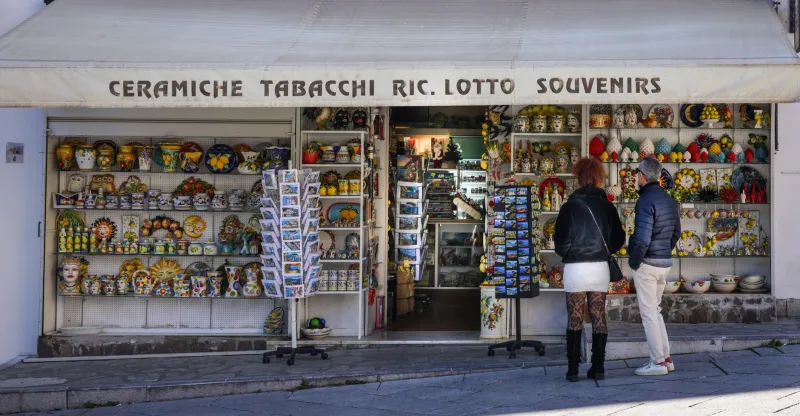
The other week I did something I suspect half of Britain has done this year: I went to a museum for the exhibition and spent longer in the shop. Not by accident. The show was good — thoughtful, well lit, the kind of thing that makes you feel briefly clever — but the shop had a table of risograph prints, a wall of postcards arranged like a tiny survey of twentieth-century design, and a shelf of ceramics by a potter from Stoke. I left with a card, a pencil and the distinct feeling that I had understood the point of the place more clearly on the way out than on the way in.
That is not a confession. It is a pattern. Walk into the V&A, the British Museum, Tate Modern, the Whitworth or a small regional gallery on a wet Saturday and you will see the same thing: people lingering. Not because they are avoiding the rain, although they might be. Because the shop has become the last room of the exhibition, and increasingly the one we talk about on the train home.
The Room After the Room
Museum shops used to be an afterthought — a rack of pencils, a few tea towels, a poster of something famous cropped badly. Now they are designed. They are lit. They have a point of view. The best ones behave like small independent shops that happen to have a collection attached, and the effect is disarming. You are no longer buying a souvenir of the gift shop; you are buying a piece of the museum's taste.
This is partly economics. Museums have spent years under funding pressure, and retail income is not a frivolous extra — it is part of how the lights stay on. But it would be lazy to reduce the shift to spreadsheets. The real change is curatorial. Someone is choosing those postcards. Someone has decided that the postcard wall should be arranged by colour rather than artist, or that the ceramics should sit next to the books on British studio pottery, or that the children's section should include a cardboard model of a Viking ship rather than another plastic dinosaur. Those are editorial decisions, and they shape how we remember what we have just seen.
The Postcard Is a Serious Object
I have come to believe the postcard wall is the most honest part of any museum shop. It is cheap, democratic and endlessly editable. A good wall can tell you what a museum thinks it is: a survey of its collection, a mood board, a joke, a provocation. The British Museum's wall leans global and encyclopaedic. The V&A's leans decorative and slightly mischievous. A small local museum might have three postcards of the same bridge and one of a sheep, and somehow that is perfect.
Postcards also solve a problem that souvenirs often create. They are not trying to be useful. They are not pretending to be an heirloom. They are a small, cheap way of saying: I was here, and this is what I noticed. That is a modest transaction, and it is often the most satisfying one.
The Ethics of the Tote Bag
The souvenir has an ethics problem, and we all know it. A tote bag that says the name of a gallery is not inherently a moral failure, but it is worth asking where it was made, who printed it, and whether the museum needs the money more than you need the object. In 2026, more British museums are answering those questions on the label — or at least on the website — and the best shops now mix mass-produced lines with work by independent makers: a jeweller from Glasgow, a print studio in Bristol, a ceramicist from Stoke, a textile designer from Leeds.
That mix matters. It means the shop is not just a branding exercise. It is a small marketplace, and the museum is acting as a tastemaker with a duty of care. When it gets that right, you come away with something that feels like a genuine encounter rather than a logo with a receipt.
Why We Linger
There is also a simpler explanation for why we linger: the shop gives us a way to participate. Walking around an exhibition can be a strangely passive experience — you look, you read, you nod, you move on. In the shop, you make a decision. You choose a card, a book, a print, a bar of soap. You take a piece of the visit home and put it on a shelf. That is not shallow. It is how memory works. We anchor experiences in objects.
The risk is that the object becomes the point. A museum shop can tip into a merch table for a brand rather than a place of ideas. You know the feeling: the exhibition was thin, but the tote bag was excellent. That is when the last room starts to feel like the main room, and not in a good way.
What I Want From the Last Room
I want the shop to be honest about what it is. I want fewer things, chosen better. I want postcards arranged with wit, books that are actually worth reading, and ceramics that do not look like they were designed by a committee. I want the person behind the till to know why the print in my hand is interesting. And I want the museum to keep the balance right: the collection first, the shop second, the memory somewhere in between.
Because the truth is that the last room knows something the galleries sometimes forget. We do not only want to look at culture. We want to take a small, manageable piece of it home, put it on the hall table, and let it remind us that we were there. That is not a guilty pleasure. It is the business of memory, and Britain's museum shops are getting better at it all the time.