The Bus Ticket in Chapter Eleven
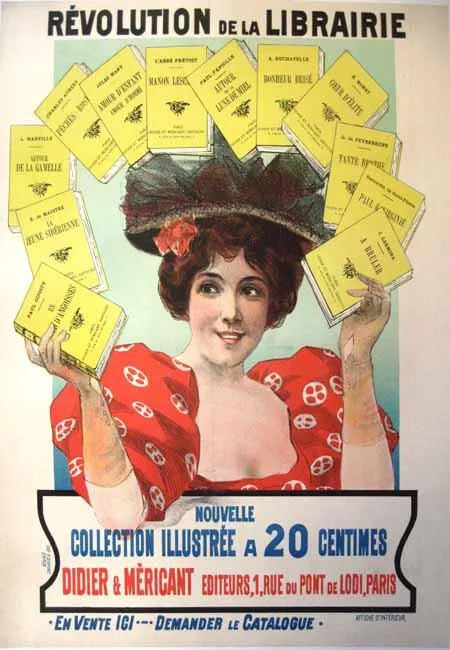
Photo: Didier & Méricant, publishing company, active Paris, 1897-1900 Printed by Imprimerie Paul Dupont Unknown illustrator living ca 1897, Public domain, via Wikimedia Commons
In a charity bookshop in a rain-softened market town, I recently bought a 1970s paperback for £1.50. It smelled faintly of someone else’s house. Halfway through chapter eleven, a bus ticket fell out. It was for a journey I couldn’t place, dated decades ago, creased into a soft grey fold. Behind it was a shopping list in blue biro: teabags, milk, a birthday card for Mum, something for tea. I stood there in the shop, holding someone else’s Tuesday.
This happens more than we admit. Books are portable rooms, and when they change hands they take a little of the previous occupant with them. A dedication in fountain pen. A name in childish pencil. A receipt from a chemist that closed years ago. These are not grand historical documents. They are the ordinary debris of British life, and they are quietly disappearing into bin bags every week.
The book as a borrowed coat
A second-hand book is never entirely clean. I don’t mean foxing or a cracked spine. I mean the small evidence of use: a corner turned down, a sentence underlined, a hospital appointment card used as a bookmark. We tend to treat these traces as damage or clutter. But they are also a kind of record. They tell us how a book travelled, who needed it, and what else was happening on the day it was read.
Booksellers know this better than anyone. Ask behind the counter of an Oxfam Books or a cramped second-hand shop in a provincial high street and you will hear about the things that fall out. Letters. Photographs. A pressed rose from a wedding. A doctor’s note. A betting slip. One bookseller told me she keeps a shoebox of found items because she cannot bring herself to throw them away. She does not catalogue them. She just keeps them, as if the box itself is a small act of respect.
Archivists would call this ephemera. The word sounds dry, but it covers the paper that fills a life: tickets, lists, receipts, notes, labels. Official archives tend to preserve the exceptional. The accidental archive preserves the ordinary. It is the difference between a museum label and the back of an envelope.
What the scraps actually say
A shopping list is not literature. But it is evidence. It tells you what someone ate, what they could afford, what they were worried about forgetting. A receipt from a hardware shop can place a household in a particular town at a particular moment. A bus ticket can hint at a commute, a hospital visit or a day out. A pressed flower can be a funeral, a first date or simply a good afternoon in the garden.
These things matter because they are specific. Britain’s high streets have changed beyond recognition in the last thirty years. The shops named on old receipts have merged, closed or been demolished. The prices look absurd. The bus routes have been redrawn. A receipt found in a book is not just a record of a purchase. It is a tiny map of a country that has moved on.
Dedications are their own genre. To Joan, Christmas 1986. For Dad, from all of us. A name and a date can turn a cheap novel into a family object. Sometimes the book has been given three or four times. You can read the chain of hands it has passed through. It is a social history written in pencil.
The ethics of keeping and binning
There is a temptation to treat every found scrap as treasure. It isn’t. Some of it is just rubbish. A supermarket receipt for a pint of milk is not automatically profound. The point is not to romanticise every piece of paper. The point is to notice what we have before we throw it away.
There is also a privacy question. A name, an address, a medical note — these are not ours to publish. The bookseller’s shoebox is one thing. A website is another. If a scrap identifies someone living, it should stay private. The pleasure of found ephemera is not gossip. It is atmosphere. It is the sense that a book has been lived with, not just stored.
The practical answer is probably modest. If you find something in a book you are selling or donating, don’t bin it immediately. Read it. Put it back. Mention it to the buyer. If you own a shop, keep a box for the things that fall out. If you run a library sale, add a note to the table: found inside. It costs nothing and it changes the way people look at the books.
Why the ordinary trace matters now
Most of us now leave fewer physical traces. Our messages vanish into apps. Our photographs live in clouds. Our receipts are emailed and deleted. That makes the old paper in second-hand books feel oddly precious. It is not that the past was more authentic. It is that it was more physical. A bus ticket in chapter eleven is a handshake across time, even if the person on the other end has long since got off.
So next time a receipt slips out of a paperback, don’t screw it up straight away. Look at the date. Read the list. Wonder who carried it. Then put it back where you found it. The book has kept it this long. It can keep it a little longer.