The Shelf That Talks Back: How Britain’s Indie Booksellers Are Outsmarting the Algorithm
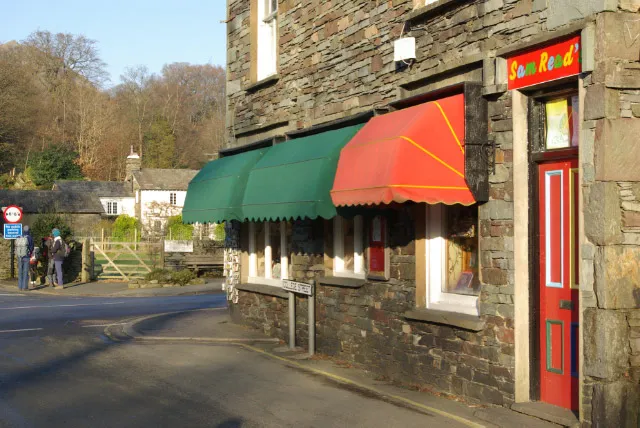
Photo: Stephen McKay, CC BY-SA 2.0, via Wikimedia Commons
At The Margin, a narrow bookshop in Leeds, there is a shelf-talker that reads: 'If you liked Normal People, this is the same feeling but with better weather and worse decisions.' It is handwritten in blue biro on a piece of card that has been reused at least once. It is not a review. It is an argument. And it is selling books.
This is the quiet revolt happening in independent bookshops across the UK. While online retailers refine recommendation engines and social media turns reading into content, a growing number of booksellers are leaning into the opposite: handwriting, local knowledge, and the deliberately unscientific art of putting a book into someone's hand.
The note in the margin
Rosa Fenwick, who runs The Margin, says the shelf-talker is the shop's editorial page. 'We are not trying to be Amazon with a nicer door,' she says. 'We are trying to make a shelf argument. A good note tells you what the book feels like, who it is for, and why it is here rather than in the pile by the till.'
The shelf-talker is a very British form of cultural commentary. It is understated, often funny, and occasionally rude. It assumes you can take a joke. It does not say five stars or readers also enjoyed. It says: 'For anyone who has ever been the sensible one.' Or: 'Do not buy this for your dad unless he has a sense of humour.' Or: 'This will ruin your weekend in the best way.'
Priya Shah at Salt House Books in Margate calls it the last honest recommendation. 'An algorithm knows what you bought,' she says. 'A bookseller knows what you need. Those are different things. We are allowed to be wrong in public. That is what makes it human.'
Blind dates and local obsessions
Blind date books — wrapped in brown paper, with a few clues written on the front — are another weapon. They are not new, but in 2026 they have become a way to reintroduce serendipity. 'People are tired of being predicted,' says Fenwick. 'They want to be surprised by something that is not based on their last purchase.' A good blind date is not random. It is curated with a wink. 'A novel about grief and swimming.' 'A memoir about a bad father and a good dog.' 'A book that will make you miss a train stop.'
Hyper-local curation is the other quiet rebellion. At Paget's Yard Books in Shrewsbury, there is a shelf called About Here — local history, novels set in the borders, nature writing about the Severn. Ewan McAllister, who runs the shop, says the shelf is not parochial. 'It is a form of resistance to the generic,' he says. 'A bookshop in Bristol can stock a book about Bristol because it knows the streets in it. A shop in Norfolk can recommend a nature writer because the landscape is outside the window. That is not an algorithm. That is a relationship.'
The art of the shelf-talker
Look closely at a good shelf-talker and you will see a whole literary culture in miniature. The card is usually recycled. The handwriting is often bad. There is a small drawing, a star, a coffee ring. The best ones have a voice: dry, discerning, allergic to hype. They are not there to sell you the book you already wanted. They are there to sell you the book you did not know you wanted.
One note in a Sheffield shop reads: 'The best novel about a bad marriage since the last one you read.' Another in Edinburgh says: 'Read this on a train. Missed my stop. No regrets.' A third, in a Cardiff bookshop, simply says: 'I have not stopped thinking about this. Sorry.'
This is criticism as conversation. It is not a score out of five. It is not a sponsored placement. It is a person saying: I read this, I have a view, and I am willing to stake a small piece of card on it. In a culture that treats recommendation as a transaction, that is quietly radical.
The economics of handwriting
None of this is free. Indie bookshops in 2026 are still dealing with rising costs, business rates, and the relentless discounting of online retail. Handwritten notes do not pay the electricity bill. But they do something else: they build a reason to come back. A shelf-talker is a small promise that a person has read the book and has a view. In a market where everything can be recommended, that is increasingly rare.
The shops that are thriving are not trying to beat the algorithm at its own game. They are playing a different one. They are selling attention, taste, and the possibility of being surprised by a human being who knows the difference between a book you might like and a book you will remember.
A voice with a postcode
The algorithm is not the enemy. It is just not local. It knows your history, not your street. The indie bookshop knows that the best recommendation is often an argument, a joke, a hunch. It is a handwritten card in a shop that smells of paper and rain. It says: this one. Trust me. And in 2026, that is a radical thing to say.