The Comfort Conspiracy: What to Watch, Read and Revisit as a British Winter Closes In
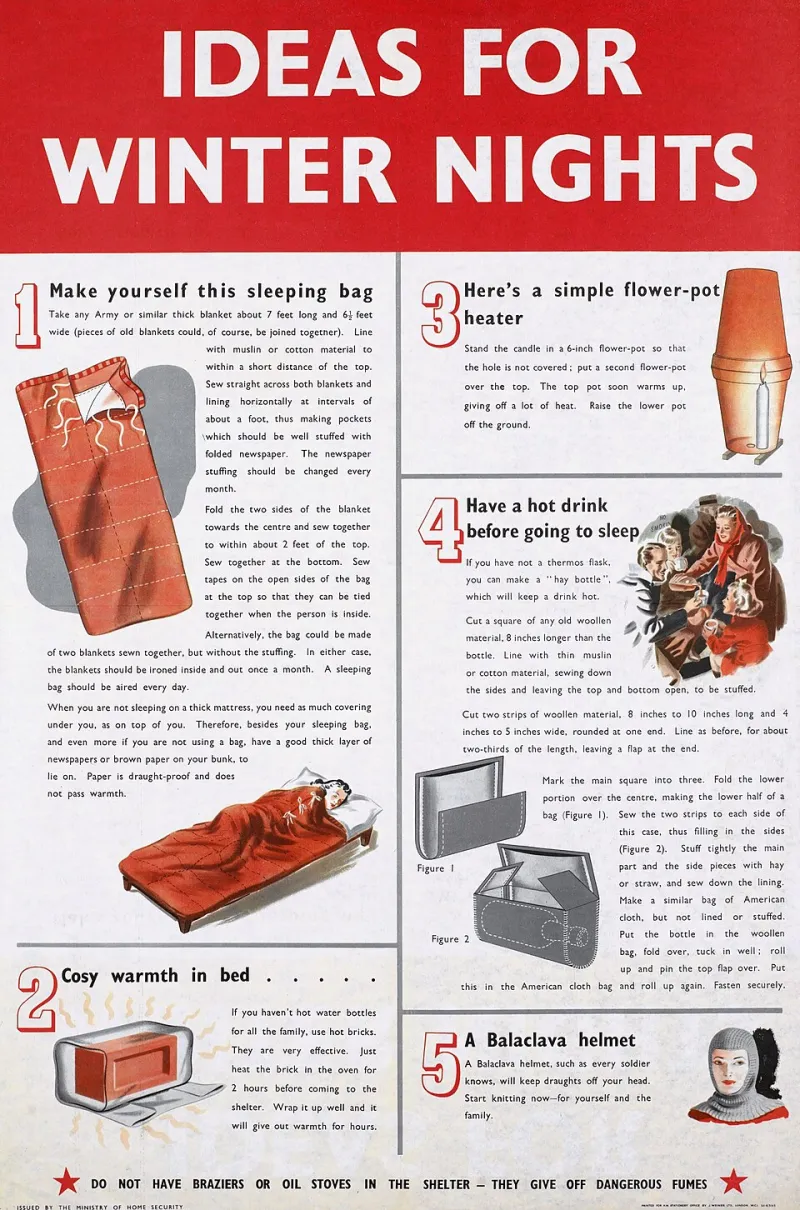
Photo: Unknown (artist), J Weiner Ltd, 71/5 New Oxford Street, London WC1 (printer), Her Majesty's Stationery Office (publisher/sponsor), Ministry of Home Security (publisher/sponsor), Public domain, via Wikimedia Commons
Comfort is a skill, not a failure
November in Britain does something to the brain. The lights go on at four, the heating clicks, and the urge to watch something familiar becomes almost physical. Comfort viewing gets a bad reputation, as if the only serious culture is difficult culture and the only worthwhile evening is one spent with a subtitled film and a headache. There is nothing wrong with wanting to be soothed. The question is what you choose, and why.
The comfort conspiracy is not really about hiding from the world. It is about managing your attention. A familiar programme asks less of you than a new one, and sometimes that is exactly what you need. The trouble starts when comfort becomes the only thing you can face. So this winter, mix the old with the new. Let the archive warm you up, then go and see something you cannot pause.
The archive is not a museum
The BBC archives are a national comfort blanket, and they are also a working library. The annual return of the Ghost Stories for Christmas strand is a ritual for a reason: the form is short, strange and oddly cosy, even when it is trying to frighten you. The Box of Delights still casts its spell. Old episodes of Gardeners' World, black-and-white plays, regional documentaries: these are not just nostalgia. They are lessons in craft. Watch how a 1970s production uses silence, or how a small budget is made to feel like a whole world. You will learn more about storytelling from a repeated favourite than from a dozen new releases you barely remember.
New for 2026, without the hype
Comfort does not have to mean old. This winter there are new things worth leaving the house for: the 2026 British films getting a limited run at independent cinemas, the debut novels from small presses that booksellers are quietly pressing into your hands, the regional theatre productions that are not panto (though panto has its place, and its place is usually a Tuesday). The trick is to pair the new with the familiar. See a new film on a Saturday and watch an old one on a Sunday. Read a 2026 debut and keep a well-thumbed favourite by the bed. Comfort works best when it is a conversation between then and now, not a loop.
A small room and a live thing
Regional theatre is the opposite of comfort viewing. You cannot pause it. Someone might forget a line. The person next to you might rustle a bag. But that is the point. A live room reminds you that culture is made by people in real time, in places that are not London, for audiences who are not checking their phones. Independent cinemas do something similar: a film feels different when the lights go down with fifty other people rather than alone on a laptop. You are not just consuming a story. You are sharing a room with it.
Second-hand bookshops and the accidental reread
There is a particular pleasure in a second-hand bookshop in winter. The shelves are warm, the smells are papery, and the books have already had one life. You go in for one thing and come out with another: a 1970s paperback with a previous owner's name inside, a local history you did not know existed, a novel you last read at school. Revisiting a book is not the same as rereading it. You are a different reader, and the book knows it. That is why the accidental reread is one of the great comforts of the season. It is not repetition. It is a reunion.
Nostalgia: comfort or creative trap?
Nostalgia can be a trap. It can turn culture into a warm bath, and a warm bath is a lovely place to start but a terrible place to live. The danger is not in enjoying old things. The danger is in pretending that old things are the only things that can comfort us, or that the past was a simpler, better place. It was not. It was just as complicated, and it produced its own comforts because people needed them.
The creative trap is when nostalgia stops being a conversation and becomes a substitute for making new work. You can see it in culture as well as in living rooms: the endless remakes, the safe schedules, the willingness to settle for the familiar because the unfamiliar might ask something of us. But comfort is a base camp, not a destination. Use it to get warm. Then go back out.
So this winter, watch the old thing. Read the new thing. Go to the small theatre. Buy the second-hand book with someone else's name in it. Let nostalgia do its job, which is to remind you what you love, and then let it point you back towards the world. The nights are long. The comfort is real. But so is the work.