Shelf Lives: The Quiet Curation Happening Behind the Charity Shop Till
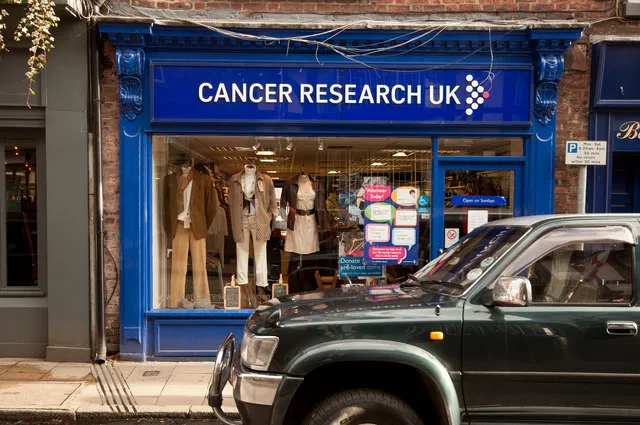
Photo: Roger A Smith , CC BY-SA 2.0, via Wikimedia Commons
On a wet Saturday morning in late November, the charity shop on the high street smells of damp coats and lemon polish. Behind the counter, a volunteer is holding a gravy boat at arm’s length, squinting at the maker’s mark. 'Royal Doulton,' she says, to nobody in particular. 'Fifty pence. It’ll go.' It does not go. It will sit on the shelf by the window for three weeks, then move to the back, then to the box marked 'summer fair'. This is not failure. It is curation.
The Shelf Is a Small Exhibition
Charity shops are often described as jumble. They are not. A jumble is random; a charity shop shelf is edited, however quietly. Someone has decided that the Denby mugs should sit together, that the jigsaws should be stacked with the picture facing out, that the vinyl should be near the door where the men can see it. Someone has chosen which books get the window and which get the dark corner. Someone has written 'lovely condition' on a label in biro and meant it.
That someone is usually a volunteer. They are not curators in the museum sense. They do not have a budget or a strategy document. But they are making choices about taste, value and what deserves to be seen. The charity shop shelf is one of the few places in Britain where the public is invited to browse an exhibition and then take a piece of it home for £1.50.
What Sells Fast, What Waits
The fast sellers are a social study in themselves. Complete jigsaws go quickly, especially in winter. Good cookbooks — the ones with splatters on the spine — never last long. Denby, Le Creuset, anything with a name that suggests a wedding list. Children’s dressing-up clothes in October. Christmas decorations in November, even the slightly tired tinsel. Board games, if all the pieces are there. Vinyl, if it is the right vinyl, which usually means Fleetwood Mac and nothing too experimental.
The lingerers are just as revealing. Matching dinner services. Ornamental plates with a picture of a cat. Fondue sets. Exercise equipment. Self-help books from another era, still promising a better life in 250 pages. Anything that requires a serving spoon and an occasion. The lingerers are not bad objects. They are objects that belonged to a version of British life we thought we were going to have. The bread maker. The juicer. The set of six wine glasses kept for guests who never came.
The Handwritten Label Is the Voice
The price label is where the volunteer’s personality leaks out. A printed barcode says nothing. A handwritten sticker says '50p — as seen', 'working, we think', 'needs a clean', 'small chip on rim, still useful'. These are not just descriptions. They are little acts of honesty. They are also a kind of prose. A label that says 'posy bowl' rather than 'vase' tells you something about the person who wrote it. A label that says 'vintage' on a 1990s mug tells you something else.
The labels also carry the local weather. In a seaside town, you will find more shell ornaments and deck shoes. In a market town, more garden tools and hunt prints. In a city, more H&M and more books about therapy. The shelf is a mirror of domestic life, but it is a local mirror. It reflects what people in that street, that town, that postcode actually owned. It is not a national average. It is a neighbourhood’s attic, turned inside out.
The Quiet Politics of the Window
Window duty is the closest thing to a gallery hang. The volunteer who does the window has power. They decide whether the shop looks cheerful or careful, whether it says 'bargain' or 'browse'. A good window can make a shelf of old glass look like a still life. A bad window can make a good shop look like a skip. The window is also a message to the high street: we are open, we are tidy, we are not a dumping ground.
There is a moral economy in all this. Volunteers price to move things on, not to maximise profit. They know that a £2 handbag will sell, but a £5 handbag will sit. They know that a bowl marked 50p may be worth more, but they also know that the point is to raise money for the cause and to keep the shop breathing. The shelf is not a museum. It is a cycle. Things come in, things go out, and the volunteer is the person who keeps the wheel turning.
The Honest Mirror
So next time you are in a charity shop, look at the shelf as an exhibition. Notice the handwriting. Notice what has been placed next to what. Notice the one object that has been there for months, waiting for the right person. The volunteer behind the till is not just selling. They are arranging, deciding, remembering. They are the quiet curators of the British sideboard, and their gallery is open six days a week.