Parked at the End of the Terrace: The Van That Still Sets the Week’s Rhythm
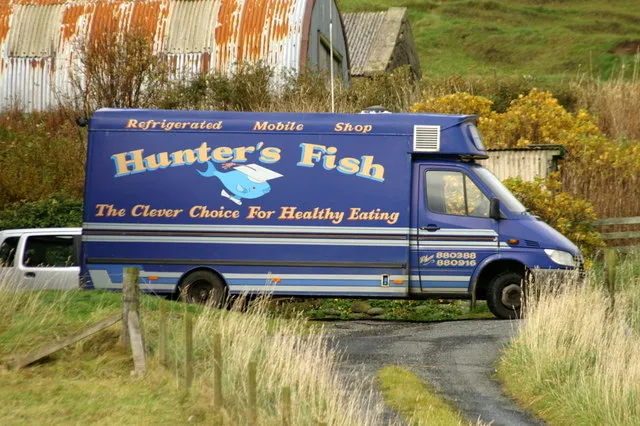
Photo: Mike Pennington, CC BY-SA 2.0, via Wikimedia Commons
Friday, 4.10pm, and the fish van is parked at the end of the terrace with its back doors open. The queue is already four deep. A woman in a tabard is discussing the haddock with the driver as if they have known each other for years, which they have. A man in a works van has been sent for 'something for tea, not salmon'. A child is holding a pound coin and looking at the prawns with deep suspicion. The van's engine ticks as it cools. The whole street seems to lean towards it.
The Route Is the Shop
Mobile shops are not a quirky throwback. They are a logistics operation run on memory. The fish van knows that the cul-de-sac off the main road has three regulars and a dog. The butcher's van knows that the farm track is impassable after heavy rain, so it stops at the gate instead. The grocer's van knows which pensioner wants a small loaf and which household will take the bruised bananas for a pound. The milk float, where it still runs, knows who wants oat milk on a Tuesday and who leaves out the empty bottles with a note.
In 2026, the big weekly shop can be done from a phone in minutes. But a phone cannot tell you that the cod is good today, or that the lamb is from a farm twenty miles away, or that the apples are small this year because of the frost. The van can. It brings the shop to the street, but it also brings the knowledge of the shop. That is the difference.
Loyalty, With a Pound of Haddock
The queue is a social club with a practical purpose. People arrive early to get the good stuff and stay late for the chat. They talk about the weather, the roadworks, the neighbour who has gone quiet, the price of everything. They ask after each other's families. They complain about the council. They hold each other's places. If someone is ill, the van driver hears about it and puts a bit of fish in the bag for later. If someone has died, the van driver hears about that too, and the queue goes quiet for a moment before someone says something kind.
There is loyalty on both sides. The customer keeps coming because the van turns up, because the prices are fair, because the driver remembers. The driver keeps coming because the route makes sense, because the regulars are reliable, because a street that queues is a street that still wants a shop. It is not sentimental. It is a business built on repetition and trust. The van has to be there. The people have to be there. The week arranges itself around that agreement.
What the Van Knows
A mobile shop is a small intelligence network. It knows which houses are empty and which have new babies. It knows when the school holidays start because the queues change. It knows that the woman at number 14 only buys on a Friday, and that the man at number 22 will pretend he is not buying anything and then ask for a pork pie. It knows the pavement gossip before the pavement does.
That knowledge is not a gimmick. It is what makes the service work. The driver can suggest a cheaper cut, warn you off the mackerel, or tell you to get the smoked haddock because it is particularly good this week. You cannot get that from a drop-down menu. You can get a delivery, but you cannot get a recommendation from someone who has seen the state of the sea that morning.
The Week Has a Shape
Not every street has a van. Some have lost theirs, and the gap is felt in small ways: the extra bus trip, the heavier bag, the vague sense that Friday is missing its marker. Where the vans survive, they survive because people use them. They are not charity cases or heritage projects. They are shops with wheels, and they are still doing the thing shops are supposed to do: turning up, knowing the customer, and making the week a bit more manageable.
When the fish van pulls away at 5.15, the queue disperses with bags and plans. Tea will be haddock and chips. Someone will text a neighbour to say the van had scallops. The street returns to normal. But the rhythm has been set, and next Friday it will happen again. In 2026, that is a quiet kind of luxury: a shop that comes to you, and a street that still waits for it.