Less Output, More Life: The Quiet Rebellion of Britain’s Slow Creatives
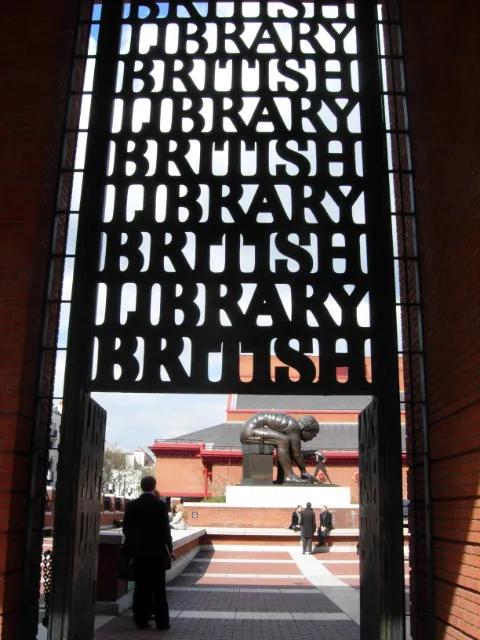
Photo: Stephen McKay, CC BY-SA 2.0, via Wikimedia Commons
I used to think a portfolio career sounded elegant. A bit of writing, a bit of teaching, a bit of making: a life with many doors. Then I tried it. For a while, my own version looked less like a portfolio and more like a badly packed suitcase. I said yes to everything, because everything was a stream of income. I wrote copy I did not care about, took on editing work at midnight, and treated rest as something I would get to after the next deadline. The doors were open. I was just too tired to walk through any of them.
That is the problem with the way we talk about creative work in Britain right now. The portfolio career has been co-opted by hustle culture. It is sold as freedom, but it often arrives as fragmentation. You are a writer, a facilitator, a social media manager, a podcast editor and a person who answers emails at 7am. The language is upbeat — multiple revenue streams, diverse income, flexible working — but the reality is a diary with no margins.
The portfolio career got hijacked
Somewhere along the way, variety stopped meaning range and started meaning scramble. The creative industries have always been precarious, but the past few years have made precarity feel like a personality trait. Rising rents, frozen fees, the cost of living, the endless encouragement to monetise your hobby: it all pushes in the same direction. Do more. Sell more. Turn your personality into a product. If you are not exhausted, are you even serious?
In 2026, the answer is finally, quietly, no. I am noticing a different mood among the artists, writers and makers I know. They are not chasing less work because they have given up. They are chasing less work because they want to keep going. They are building what I have started to call a portfolio life: a way of working that includes variety, but also rest, depth and a bit of blank space.
What slower actually looks like
It does not look like a cottage in the Cotswolds and a neatly handwritten journal. It looks like a ceramicist in Bristol who now makes two collections a year instead of five. She told me she spent years chasing wholesale orders and Instagram deadlines, and realised she was making the same mug again and again because it sold. Now she makes fewer things, charges properly for them, and takes Mondays off. Her income dipped for a year. Then it steadied. More importantly, she stopped dreading the studio.
It looks like a Glasgow illustrator who deleted her rush-fee tier. She used to offer same-day turnarounds because clients asked, and because she was afraid of losing them. Then she worked out that the rush work was eating the time she needed for the work she actually wanted to be known for. She now says no to anything that needs doing by Friday. Some clients drifted away. The ones who stayed plan ahead.
It looks like a writer in Sheffield who cut his newsletter from weekly to monthly. He was terrified. He thought the subscribers would vanish. They did not. A few unsubscribed, which he now describes as a public service. The monthly letter is better, and he has time to read, which is not a luxury for a writer but part of the job.
The arithmetic of enough
None of this is easy, and I do not want to pretend otherwise. Slower work is a privilege if you have savings, a partner with a steady job or a cheap mortgage. For plenty of British creatives, saying no is not a philosophical choice; it is a financial impossibility. That is why the slow creative movement can sound smug from the outside. It should not. The point is not that everyone can downsize tomorrow. The point is that the constant expansion of output is not the only way to survive.
The people I spoke to had all done some version of the same calculation. They worked out what enough looked like — not enough to be rich, but enough to cover the bills without saying yes to everything. Then they protected the time that was left. One maker I know blocks out a fortnight every quarter with nothing in it. No admin, no commissions, no meetings. It is not a holiday. It is a buffer against the inevitable chaos of freelance life.
A different kind of ambition
I have started to think of this as a quieter kind of ambition. It is not anti-work. It is anti-slog. It values craft over content, depth over frequency, a body of work over a feed. It accepts that a creative life needs fallow periods. It admits that rest is not a reward for finishing everything; it is part of the process.
I am not perfect at it. I still check my email too early. I still say yes when I should say maybe. But I have stopped measuring my life in output. The portfolio life is not a neat five-year plan. It is a decision, made again and again, to leave a little room. Room for the work to get better. Room for a walk. Room for the odd Tuesday with nothing on it. In a culture that keeps telling us to do more, that might be the most creative thing of all.