Not Everything Needs a Shop Link: A Defence of Hobbies That Earn You Nothing
A confession: I have a hobby that has never made me a penny, and I intend to keep it that way.
It has no brand name. There is no shop link. I have never once thought about "audience growth" while doing it, and if you asked me what my five-year plan was, I'd probably say "to keep doing it on Sundays." This apparently makes me a strange person to be around in 2026, when every spare hour is expected to emerge from the chrysalis as a side hustle, a Substack, a small-batch candle business or at the very least a monetised video of someone else doing it.
We need to talk about this, because the pressure has got ridiculous.
The great hobby inflation
Somewhere in the last decade, rest became a productivity project. Knitting turned into a pattern shop. Running turned into a coaching account. Baking sourdough turned into a course, then a podcast about the course. And look, if you've genuinely built something you love into something that pays the gas bill, I'm delighted for you and slightly envious.
But there's a difference between a hobby that happens to earn and a hobby that exists to earn. The second kind is a job with worse hours and no holiday. And an awful lot of people I know have quietly stopped doing the thing they loved because the moment it stopped growing, it started feeling like failure.
The allotment doesn't care
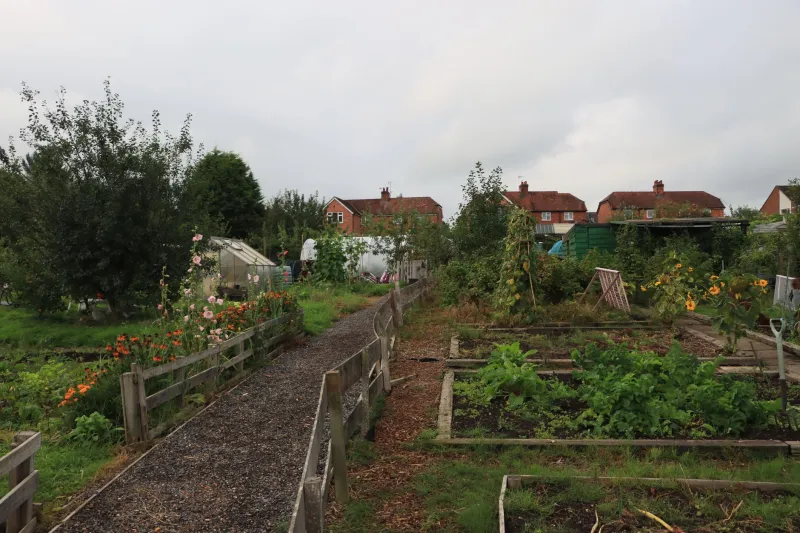
Consider the allotment, which may be the most honest pastime in Britain. You pay your rent to the council, you get a patch of ground, and then you spend an entire spring being outsmarted by pigeons.
Nothing about it scales. You cannot "optimise" a runner bean. There is no growth hack for a slug. And crucially, the allotment community is one of the last places in the country where people regularly talk to each other without any expectation that it will lead anywhere. You swap seeds. You complain about the water pressure. You go home. That's it. That's the whole transaction, and it's enough.
Allotment waiting lists have stayed stubbornly long for years now, and I don't think it's only about food prices. It's about having somewhere to go where the only metric is whether the tomatoes came up.
Bell-ringing, radio and the joy of being unmarketable
My favourite examples of gloriously unmonetisable leisure are the ones that are technically difficult, socially embedded and completely pointless to a spreadsheet.
Bell-ringing. You turn up at a church tower on a Tuesday, you learn to handle a rope, and after about six months you can join a method without disgracing yourself. Nobody is going to sponsor you. There is no merch. There is, however, a tea rota, and a genuine intergenerational community that has been running on goodwill since roughly the seventeenth century. Good luck putting that in a funnel.
Amateur radio. A hobby built on patience, technical curiosity and talking to strangers in other countries about the weather. The entire point is the contact, not the content. It is the least algorithmic pastime ever devised by human beings.
Model railways. The most sneered-at hobby in Britain, and arguably the most sophisticated. Wiring, scenery, history, carpentry, timetabling. Enormous skill, decades of it, and the end result is a shed in Retford that brings joy to about nine people and one delighted child at the village fete.
What all three share is that they are impossible to commodify without breaking them. Their value is in the doing, in the slowness, and in the fact that you get better at something for no reason other than wanting to.
What non-productive time actually builds
Here's the practical bit, for those who need one. Hobbies that earn nothing are extremely good for you, and the evidence isn't mystical.
They build patience, because there is no deadline to create urgency and no client to create panic. They build resilience, because you fail constantly — the bean crop dies, the bell goes wrong, the points jam — and nothing happens except that you try again next week. And they build community, because shared activity with no commercial purpose is one of the few reliable ways left for adults to make friends without a networking event.
There's also the sheer relief of being bad at something in public. Most of us spend our working lives being reasonably competent and being paid for it. Doing something you're genuinely mediocre at, with witnesses, is oddly restorative.
A small manifesto
So: keep the thing that pays nothing. Guard it. If someone asks whether you could "turn it into something", you are allowed to say no, and you don't have to explain.
Do it badly. Do it slowly. Do it without photographing the process. Don't buy the upgraded kit until you've worn out the cheap one. Let it take ten years to get good. Tell nobody on the internet.
And if you find yourself at a loose end on a Sunday, remember that the least profitable hours of your week might well be the ones doing the most for you. The beans won't care whether you're building a personal brand. They'll just grow, or not, and either way you'll have had a morning outside.