Flour, Warmth and a Nod: The Bakeries That Keep Britain’s Nights Human
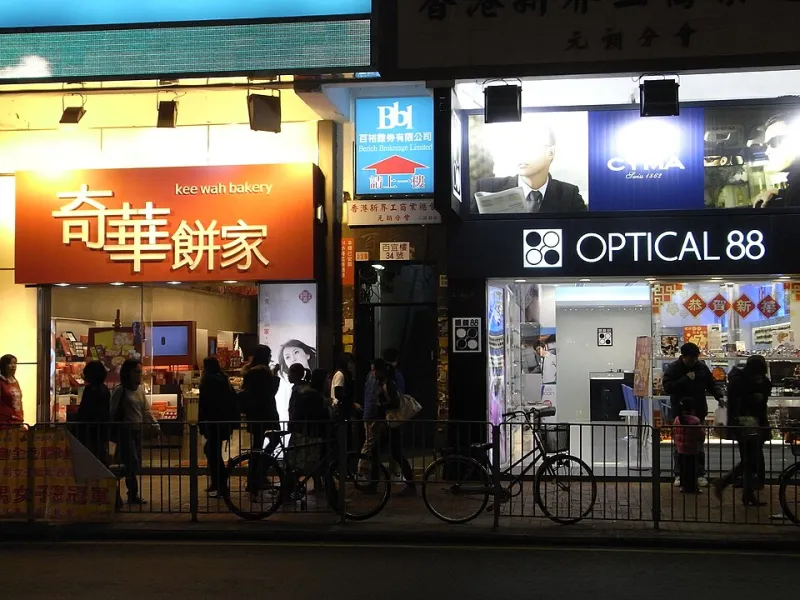
Photo: Daisanzhueng, CC BY-SA 3.0, via Wikimedia Commons
At 11.40pm on a wet Tuesday in Leeds, the only lit window on the street belongs to a bakery near the bus station. The ovens have been on since seven that morning, but the counter is still full: a tray of cheese twists, a few sausage rolls, a stack of brown paper bags. A man in a taxi jacket orders two pastries and a white loaf. The baker ties the bag with a quick twist. Nobody says much. It is one of the most civilised scenes in the British night.
That might sound like a romantic overstatement. But spend enough time in the hours after pubs, gigs and late shifts, and you notice how binary the night can feel. It is either loud and expensive or shut and dark. The late-night bakery sits in the gap. In 2026, as high streets experiment with evening opening and night-time economy strategies pile up, these counters offer something less photogenic than a cocktail bar and more useful than a locked door: a warm, affordable pause on the way home.
The window that stays lit
Late-night bakeries are not a new invention. Jewish bagel shops, South Asian sweet counters and market bakeries have kept odd hours for decades, often serving communities that work when others sleep. What feels different now is how many independent bakeries are quietly stretching their closing times, not to chase a trend but to meet a rhythm they can see from behind the till.
Nadia, 34, runs a small bakery a few streets from a coach station in the Midlands. She started opening until midnight on Fridays and Saturdays three years ago, then added Thursday after a hospital rota changed nearby. 'People think we are doing it for the late crowd,' she says. 'Really, it is for the people who have just finished work. The taxi drivers, the hospital staff, the cleaners. They do not want a big meal. They want something warm and a bit of chat.'
Colin, 58, has driven a taxi in Birmingham for more than two decades. He knows which bakery lights are worth a detour. 'At half eleven you have got two choices,' he says. 'A garage sandwich or a proper bag of something. I will take the bag every time. It is not about being posh. It is about finishing the shift with something that tastes like it was made by a person.'
Aisha, a nurse in Manchester, is a regular at a bakery that stays open until 11pm on weekdays. She usually buys a loaf and a paper bag of pastries for the morning, then eats one on the walk to the bus stop. 'At that hour my body wants toast,' she says. 'But I know if I buy it now, tomorrow morning is easier. It is a small favour to my future self.'
Not another sourdough story
It would be easy to fold these places into the artisan bakery boom: the long fermentations, the flour dust, the Instagram crumb shot. But the late-night counter is a different business. The loaves are often softer and simpler. The pastries are made for portability. The price list is short. The point is not to impress anyone with a crust; it is to be open when someone needs you.
That changes how a baker works. A late shift needs a second pair of hands, a plan for cleaning, and a sensible answer to the question of who gets home safely at 12.30am. It also changes what gets baked. 'You cannot treat it like a restaurant,' Nadia says. 'You are not finishing things to order. You are keeping a small, steady offer alive. If we have three things left at closing, that is fine. If we have nothing, that is fine too. The night is not a performance.'
The paper bag as a small contract
The paper bag does a lot of quiet work. It keeps the warmth in. It hides the fact that you are eating a second dinner. It says: this is yours, take it home, no explanation needed. In a night-time economy that often asks you to buy more, stay longer and shout louder, the bag is a modest alternative. It is a portable bit of care.
There is a ritual to it, too. The counter, the nod, the choice between sweet and savoury, the way the baker folds the top. It is not a transaction that demands much of you. You do not have to be dressed up. You do not have to be in a group. You can be on your own at 11pm and still be served with the same ordinary courtesy as anyone else.
The cost of keeping the light on
None of this is free. Staffing is the obvious hurdle. Energy bills are still a bruise. Waste is a constant negotiation: bake too much and you lose money, bake too little and you turn people away. Some bakeries find that a 9pm close is the sensible limit; others keep going because the late trade is steady enough to justify a split shift.
The other cost is less visible. A lit bakery at night is a form of public safety. It puts people on the pavement. It gives a bus stop a bit of company. It makes a street feel less like a corridor and more like a place. That is difficult to put in a spreadsheet, which is probably why it rarely gets counted.
A softer edge to the night
The British night-time economy is usually measured in pints, tickets and footfall. Late-night bakeries do not fit neatly into any of those columns. They are unlicensed, quiet and affordable. They serve the sober and the slightly worse for wear. They are useful to shift workers, students, people who have just missed the last train, and anyone who has ever wanted to end an evening without going straight home.
They are not a solution to everything. One warm bag will not fix a town centre or pay a nurse's rent. But they are a reminder that a city at night can be something other than a queue for a club or a wait for a bus. Sometimes it is just a window, a tray, a baker with flour on their sleeve and a paper bag that is still warm when you get to the front door. That is a small thing. It is also the whole point.