A Slow Game for Fast Lives: Sunday Morning on the Bowling Green
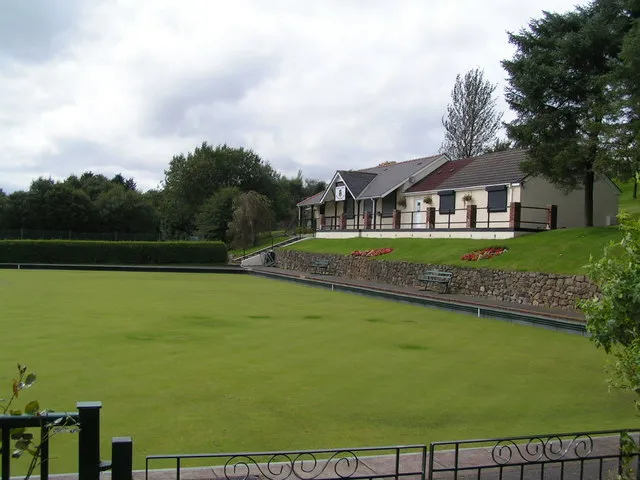
Photo: andy dolman, CC BY-SA 2.0, via Wikimedia Commons
The green has been put to bed for the winter. The flag is down, the rink markers are stacked in the shed, and the surface has been hollow-tined and top-dressed and left to think about what it did last season. But the club is very much awake. On a Sunday morning in late November, forty people are in the function room at the back, eating toast, arguing about the short mat league, and planning a membership drive for a sport most of the country thinks died out in 1974.
The Team Sheet Tells a Different Story
Look at the names on the winter list and the stereotype falls apart. There is a retired headmaster, yes. There is also a self-employed joiner in his thirties, a nurse who works three twelves and has Wednesdays free, two teachers, a data analyst, and a woman who joined after her marriage ended because, as she puts it, "it was either this or a running club, and I don't run."
This is the quiet story of British bowls in 2026. Membership is not what it was in the postwar boom, when every mill town had four greens and a waiting list, but the decline has flattened, and in a number of clubs it has genuinely reversed. Bowls England has spent years pushing taster events and open days, and it turns out that a low-impact, slow, cheerfully sociable game is unexpectedly well suited to a population that is getting older, sitting down more and quietly sick of five-a-side.
Two Games, One Word
Worth clearing up, because it trips up newcomers. Crown green bowling and flat green bowling are cousins that have not spoken much.
Flat green is the game most of us picture: a perfectly level square of turf, rinks marked out, a governing body, a national competition structure, played across England and especially in the south. Crown green is the northern and midlands variant, played on a surface that rises towards the middle, with a single jack that can be moved, and a set of rules that reward subtlety and local knowledge over raw consistency. The locals call it "the crown" and are happy to explain why it is harder.
Both, however, run on the same fuel: a small, heavy bowl, a smaller white ball, and a great deal of standing about thinking.
Learning the Etiquette
What nobody tells you before your first game is that the rules of behaviour are half the sport. On the green: flat-soled shoes, always, and never the ones you wore in the car park. Do not walk across a rink in front of a player who is about to bowl. Stand still and say nothing when your opponent is at the mat. When you have bowled, do not celebrate — you say "good bowl" if it was one, and nothing if it wasn't, and both are understood.
The bowler at the other end has the same view of the head as you do, which is to say a very partial one. Half of bowls is trusting somebody else's judgement about a millimetre.
Membership is not expensive. Most clubs sit somewhere between eighty and a hundred and thirty pounds a year, with a small match fee on top, and the offer is essentially unlimited use of a very well-kept green. Compare that with a gym.
Behind the Hatch
Norma has done the hatch for nineteen years. Tea, a pound something; a ham sandwich; a tray of cakes somebody brought in because it was their turn. On a good Sunday the club takes a couple of hundred pounds through the hatch and a bit more through the raffle, and it all goes back into seed, mower fuel and the electricity bill.
The hatch is, honestly, the engine room. It is where the fixture secretary finds out who is not well. It is where a newcomer gets introduced to three people in the time it takes to find a clean mug. It is where the etiquette gets quietly transmitted, along with the sugar.
"You get some that come in terrified," Norma says, wiping down. "Two hours later they've been beaten by a woman of eighty-two and they're signing up for the league."
What Two Hours Does to a Person
Here is the argument for bowls, and it has almost nothing to do with sport. A match is two hours. In those two hours you cannot be reached. There is no phone in your hand, no notification, no "quick call" — you are on a green, standing still, watching a bowl curve, and to do it properly you must pay attention to something small and outside yourself.
That is almost a definition of restorative. The men and women making the case for this game are not selling nostalgia or a pastime that keeps the old occupied. They are selling an alternative rhythm, at the exact moment when most of the culture has spent a decade accelerating and a lot of us have started to notice the bill.
In March the flag goes back up and the green reopens. The clubs want new members, and they are not fussy about age, shape or whether you have ever held a bowl before. Turn up. Say you are new. Someone will hand you a tea, a set of woods and three decades of accumulated advice, in that order.