Pressed Against the Glass: The Phone-Box Libraries Keeping Rural Britain Connected
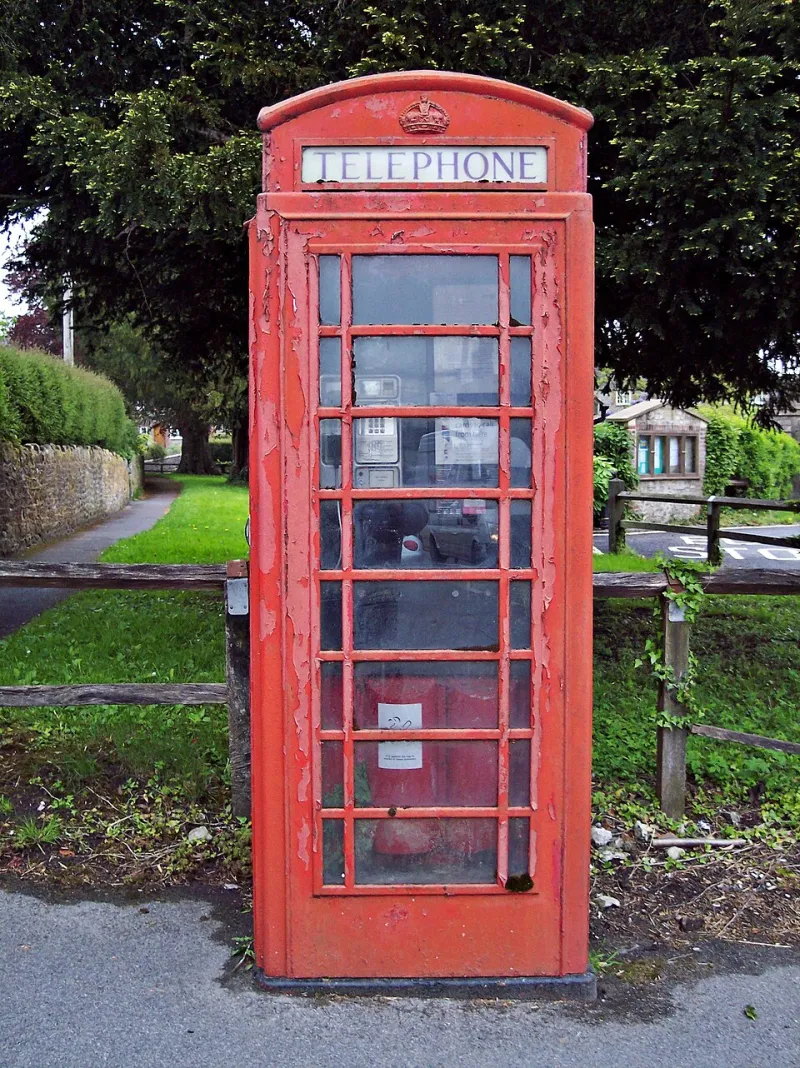
Photo: John Potts , CC BY-SA 2.0, via Wikimedia Commons
The phone box on the green no longer takes coins. It takes paperbacks. The door still sticks. The glass is still scratched. Inside, where the directory used to hang, there is a shelf of thrillers, a laminated notice and a plastic tub of children’s books. A retired librarian called June opens it on Tuesdays to check for damp. She does not stamp anything. She does not fine anyone. She just rearranges the crime section and takes out the mouldy dictionaries.
A Very Small Room With a Very Large Job
Across Britain, redundant phone boxes have been adopted and repurposed. Some are book exchanges. Some are miniature galleries. Some hold a defibrillator, a food-bank drop, a seed swap, a community noticeboard. The form is always the same: a red box, a glass door, a space barely wide enough for two people to pass. But the function changes with the parish. The box is a shell, and the village decides what to put inside it.
The people who keep them going are rarely official. A parish councillor writes the insurance cheque. A retired librarian sorts the stock. A neighbour’s husband fixes the hinge. Someone else puts a new battery in the fairy lights at Christmas. The work is small and constant. It is also a form of local government by other means. The box is not a service delivered from above. It is a service maintained from below.
The Unwritten Borrowing Rules
The rules are never printed in full, but everyone knows them. Take a book. Bring one back eventually. Do not use the box as a bin for encyclopaedias, damp paperbacks or anything you would not lend to a friend. Keep the door shut. If you take the last thriller, replace it with something. Children’s books go on the bottom shelf. The guest book is not for complaints. The box is not a dumping ground. The box is a conversation.
The rules work because they are based on trust. There is no barcode, no due date, no security tag. The box is open all hours. In a village with no shop, no bus and a patchy mobile signal, that openness matters. The book exchange is not just about books. It is about the possibility of a small, pleasant encounter. You might meet a neighbour. You might find a Lee Child you have not read. You might just stand in a phone box for a minute and feel less alone.
What Tiny Rooms Say About Connectivity
The phone box library is a comment on rural connectivity, but not in the way we usually mean. It is not broadband. It is not 5G. It is a room the size of a wardrobe where the connection is social. The nearest defibrillator might be three miles away, so the box becomes a defibrillator station. The nearest gallery might be a city, so the box becomes a gallery. The nearest bookshop might be a supermarket, so the box becomes a bookshop. The box is a stopgap, but it is also a statement of intent.
Some boxes are locked at night. Some are vandalised. Some fill with condensation and need a rota of cleaners. The volunteers know this. They do it anyway. The box is a small public room, and small public rooms are where trust is practised. You do not need a lot of space to make a place feel looked after. You need a door that opens, a shelf that is tidy and a notice that says 'please leave one, take one'.
The Smallest Public Room
If you pass one, open the door. Look at the stock. Read the laminated notice. Maybe take a book. Maybe leave one. The phone box is not a museum. It is a living room with a handle. It is one of the smallest public rooms in Britain, and one of the most optimistic. The phone may have gone, but the box is still connected.